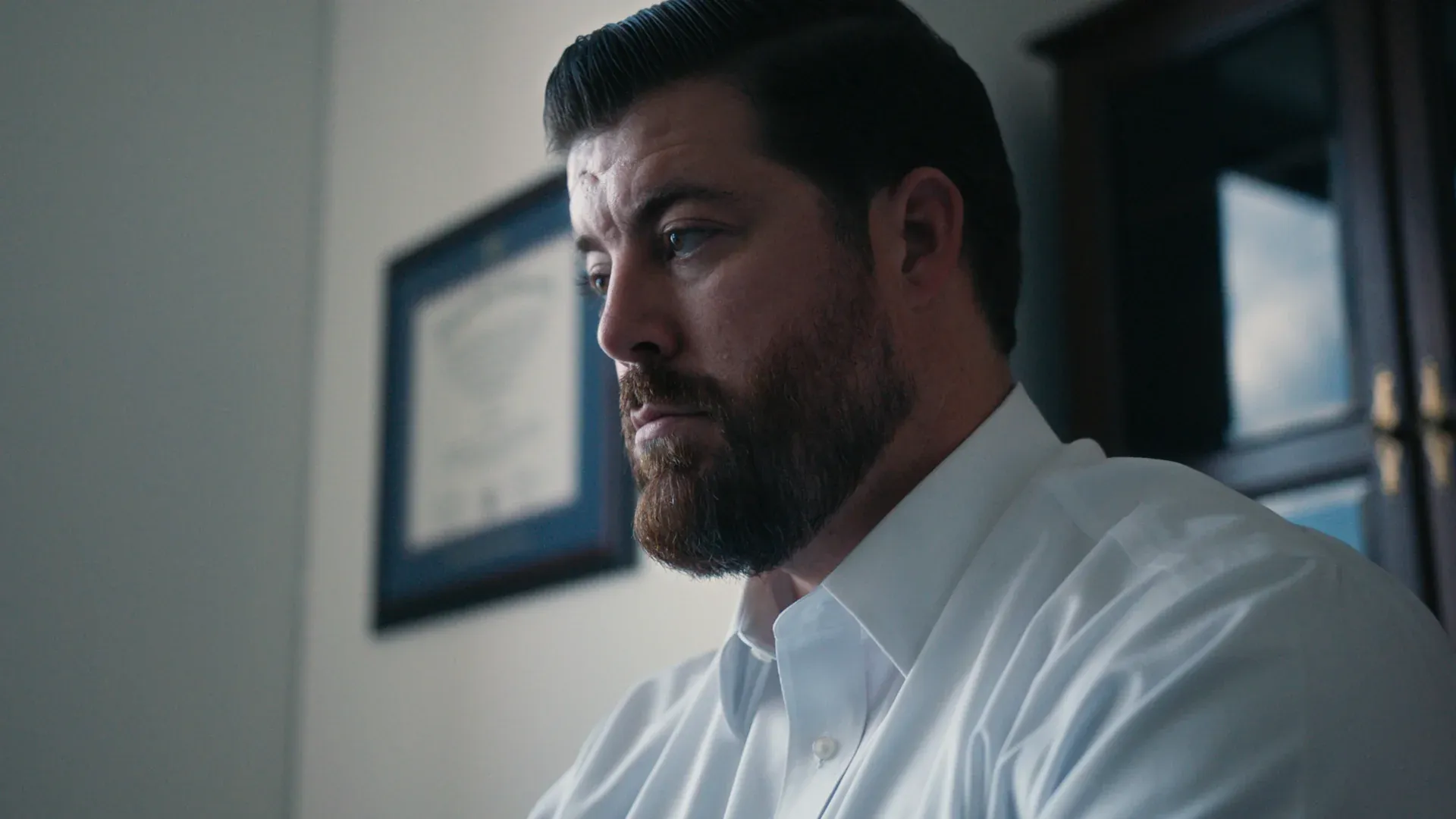
Your firm spent $15,000 to $25,000 on video production. The logo animation is clean, and nobody cares.
Three specific mistakes cause almost every case of “we tried video and it didn’t work.”
The script
Most production companies send a script before the shoot. You memorize it, then deliver it like you’re reading a legal brief out loud.
The result is an attorney who looks uncomfortable saying words that don’t sound like them.
Throw the script away.
At Story First, we sit across from every attorney and ask real questions: why they started their firm, the case that still keeps them up at night, what happens in the first ten minutes when a new client walks through the door. That conversation gives us footage that sounds like the person talking.
Shoot day turns out to be the easy part, and walking in nervous doesn’t hurt a thing.
One video, one place, then nothing
You finish production. You post the video on your homepage. Maybe you upload it to YouTube. Then it sits there.
That’s buying a billboard and putting it in your garage.
A single brand video should live in multiple places: homepage above the fold, About page, Google Business Profile, social channels. A clickable thumbnail in your email signature that links out to the hosted version works too. Most email clients block embedded video, so a thumbnail is the right move.
Then the same video gets cut into shorter pieces for ongoing distribution: 30-second and 60-second versions for social feeds. Each one drives back to the full video or your contact page.
Firms that say “video didn’t work for us” almost always mean they posted one video in one place and nothing happened. That’s a distribution problem.
For firms with an existing marketing agency, this is where we coordinate. We handle the production, they handle deployment, and the content gets used.
A complete video library gives your agency and your internal team enough material to keep using the story across the site, social channels, and follow-up.
Looking exactly like every other firm
Pull up five personal injury firm websites right now. Count how many have a courthouse photo, the phrase “aggressive representation,” and a headshot of someone in a suit.
If you were hurt in a car accident and comparing those five firms, could you tell them apart?
Most law firm video makes the same mistake. Well-produced, but it says nothing specific. “We care about our clients.” “We fight for justice.” “Our attorneys have decades of combined experience.”
The strongest attorney videos show the person, and most lawyers find that uncomfortable at first.
That means mentioning the hobbies, the family, the case that changed how you practice, and the reason you got into law that has nothing to do with prestige or grades.
Think of a managing partner who gets emotional talking about why they fight for injured people.
Those are the details a prospect remembers after five firms in a row said “aggressive representation.” They’re also the details attorneys resist sharing, because they feel too personal for a law firm’s website.
Personal injury firms have their own version of this problem, and it comes with its own genre of commercial. Our breakdown of what actually makes those ads work covers the same mistake from a different angle: the gimmick without a real story behind it.
If video didn’t deliver last time
If you’ve paid for law firm video before and it didn’t deliver, look at the strategy around the video first. The footage usually holds up.
And usually that traces back to hiring a production company when the firm needed a production partner.
The guide to video marketing for lawyers lays out the full plan, page by page. To see how it comes out, the portfolio has the finished work, the testimonials page has clients describing the process in their own words, and packages and pricing covers the numbers.
We also keep a list of ten questions to ask a production team before hiring one. See the list
Law firm video FAQ
Why do most law firm videos fail?
Three mistakes cause almost every case of it. The video is scripted so the attorney sounds rehearsed, it gets posted in one place and left there, and it says the same generic things every other firm says. Almost always the firm had decent footage and no plan for using it.
We tried video and it did not work. What went wrong?
Usually distribution, not production. Firms that say video did not work for them almost always posted one video in one place and waited. One shoot should produce a homepage video, an About page video, a Google Business Profile version, social cuts, and an email thumbnail.
Should attorneys use a script or a teleprompter for a law firm video?
No. A script makes an attorney sound like they are reading a legal brief out loud, and it reads as fake on camera. A guided conversation works better. Story First asks real questions instead of handing over lines, and the attorneys who were most nervous usually give the best footage.
Where should a law firm video be used after it is delivered?
In more than one place. The full video belongs on the homepage and the About page, on the Google Business Profile, and on social channels, with a clickable thumbnail in email signatures because most email clients block embedded video. Then it gets cut into 30 and 60 second versions for ongoing distribution.
What makes one law firm’s video different from every other firm’s?
Specifics about the people behind the firm. Courthouse footage, aggressive representation, and decades of combined experience are what every firm already says. The best videos mention why an attorney got into law, the case that changed how they practice, and what they care about outside the office.
The first step is a free Video Blueprint, built for your firm before we get on a call. Book yours.